Dry Hair Ends? How to Make Them Soft and Nourished Again
Healthy Hair Tips
Dry Hair Ends? How to Make Them Soft and Healthy Again



Do you have dry hair ends that feel rough, tangle easily or look frizzy? Dry ends are common across many hair types, even when the rest of your hair feels healthy. The ends of your hair often need extra care.
But what causes dry hair ends, how can you care for them and what is the difference between dry ends and split ends? In this blog, you'll discover what you can do to make your hair ends feel softer and smoother again.
What causes dry hair ends?
The ends are the oldest part of your hair and have often been exposed to a lot of wear and tear. Think of regular washing, brushing, blow-drying, styling and environmental factors. All these influences wear down the protective outer layer of your hair, causing your ends to lose moisture more quickly and feel rougher.
The natural oils from your scalp also have more difficulty reaching the ends of your hair. This is especially noticeable with long, thick or curly hair, where the lengths and ends often feel drier than the roots.
How to recognise dry hair ends
Dry hair ends often feel different from the rest of your hair. They may feel coarse or rough, tangle more easily and have less shine. The ends may also look frizzier or become more difficult to style.
Not every dry hair end is necessarily damaged. Sometimes, your hair simply needs extra care. Do your ends break off easily or do you notice split ends? Then your ends may be damaged.
What helps with dry hair ends?
Dry hair ends benefit most from a haircare routine that hydrates, softens and protects the hair against further dryness.
Start with a gentle shampoo that suits your hair type and use a conditioner after every wash. Pay extra attention to the lengths and ends, as these areas often need the most care.
Regularly add a hair mask to your routine for more intensive care. A leave-in conditioner or hair oil can help keep your ends soft and smooth between washes. Want to learn more about the right care? Read our tips on hydrating your hair and discover how to retain moisture in your hair more effectively.
Can you repair dry hair ends?
Whether dry hair ends can become soft again depends on the condition of your hair. When your ends are mainly dehydrated, hydrating and nourishing products help make them smoother, softer and more manageable.
Are your ends severely damaged or split? Haircare products can temporarily make the ends appear smoother, but they cannot fully repair the damaged hair fibre. In that case, it is best to have the damaged ends trimmed.
Dry hair ends without making your hair greasy
Do you have oily roots but dry ends? This is quite common. Your scalp produces natural oils, while the ends of your hair receive less of them.
You therefore don't always need to nourish your entire hair intensively. Choose a shampoo that suits the needs of your scalp and apply conditioner, a mask or a leave-in mainly to the dry lengths and ends.
This way, you give your ends extra care without unnecessarily weighing down the roots.
Which products are suitable for dry hair ends?
Which products are best for you depends on your hair type and the condition of your hair. If dryness is your main concern, a nourishing haircare routine can help make your ends feel softer again.
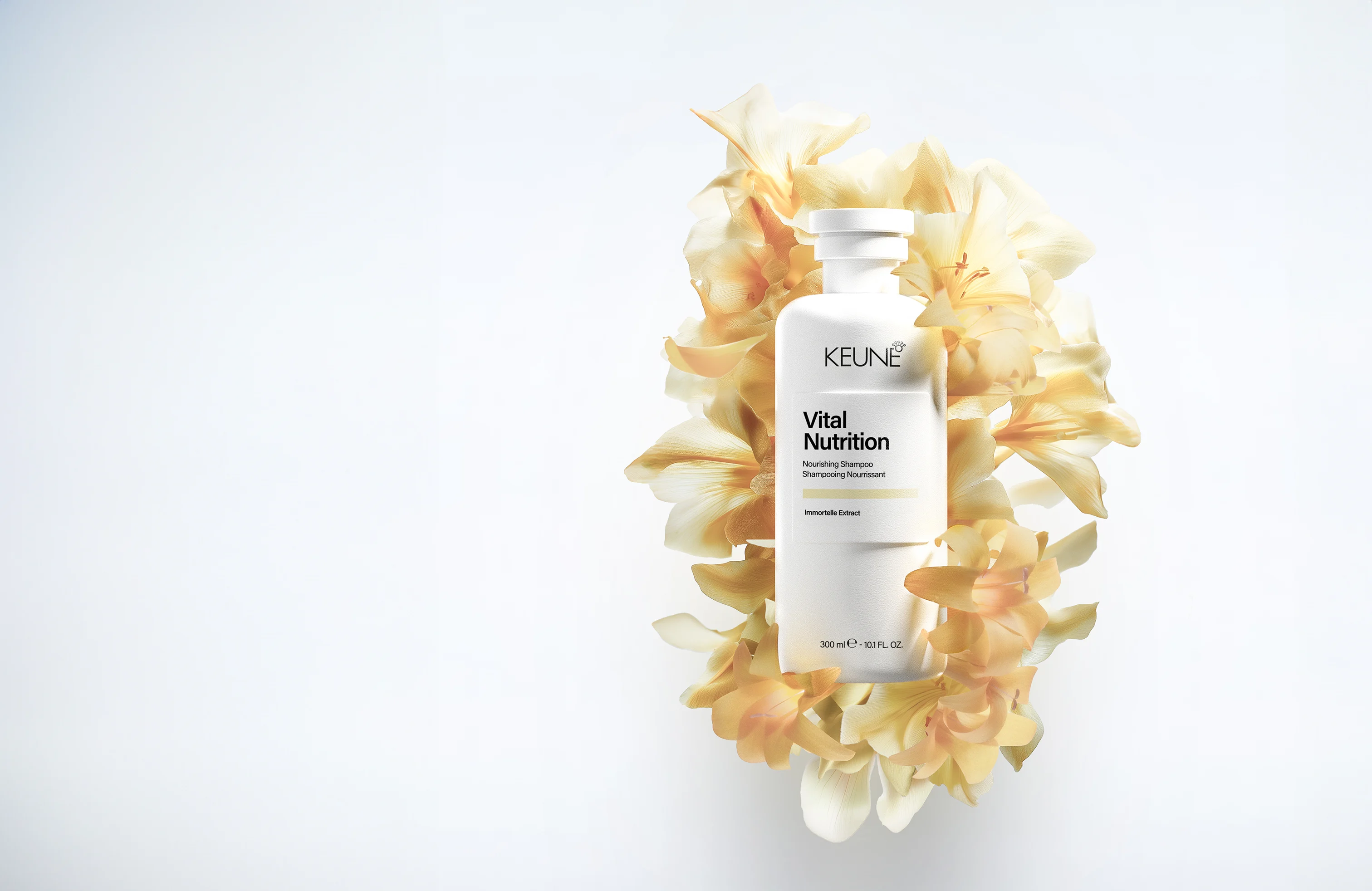
At KEUNE, the Vital Nutrition range is developed to provide intensive care for dry and damaged hair. The Vital Nutrition Conditioner helps soften and smooth the hair. For extra care, you can use the Vital Nutrition Mask. This mask provides intensive hydration and helps make dry, coarse lengths smooth again.
Want to care for your ends after washing too? The Long & Strong Leave-in helps protect the hair lengths and prevent split ends. You can also apply the leave-in to dry hair to give your ends extra care between washes.
Is hair oil good for dry ends?
A hair oil is a great addition when your ends feel dry or frizzy. Oil helps smooth the hair fibre, making the ends feel softer and giving them more shine.
Apply a small amount to the lengths and ends. Start with a little product, especially if you have fine hair. Too much oil can weigh the hair down or make it look greasy.
Keep in mind that hair oil cannot permanently repair existing split ends. It mainly helps care for the ends and make them look smoother. Want to know which oil is best for your hair? Read our blog about the best oil for your hair.
How to prevent your hair ends from drying out
Besides using the right haircare products, your daily routine also plays an important role in preventing dry hair ends.
Regularly styling your hair at high temperatures can dry out the ends. Always use a heat protectant before using a blow-dryer, straightener or curling iron and choose a lower temperature whenever possible.
Gentle brushing also helps minimise damage. Start at the ends and slowly work your way upwards so you don't have to pull too hard on any tangles.
After washing, gently pat your hair dry instead of rubbing it vigorously. This helps prevent unnecessary friction that can damage the ends.
How often should you trim dry hair ends?
How often you should trim your ends depends on your hair type, hair length and the condition of your hair. There is therefore no fixed interval that applies to everyone.
When your ends are visibly split, break off easily or constantly become tangled, a trim can help remove the damaged ends.
Have your hair regularly assessed by your KEUNE hair pro. They can advise you on when it's time to trim your ends and which haircare routine best suits your hair.
What is the difference between dry and split ends?
Dry ends and split ends are often confused, but they are not the same thing.
Dry hair ends mainly need extra care. They may feel rough and look dull, but they don't necessarily have to be split. With hydrating products, you can often improve softness and manageability.
With split ends, the tip of the hair fibre has actually split. This is usually caused by wear and damage. Haircare products can temporarily make split ends appear smoother, but trimming is the only way to permanently remove the damaged ends.
Is curly hair more prone to dry ends?
Curly hair often needs more hydration than straight hair. Because of the natural shape of curls, the oils from the scalp have more difficulty spreading along the entire length of the hair. As a result, the ends can feel dry more quickly.
A nourishing conditioner and a suitable leave-in can help keep curls soft, smooth and better defined. Within the KEUNE Confident Curl range, you'll find haircare products for different curl types, including wavy, curly and coily hair.
Which formula is best for you depends on your curl pattern and how much care your hair needs.
Give your dry hair ends the right care
Dry hair ends cannot always be completely prevented, but with the right care, you can make your hair softer, smoother and more manageable. By regularly hydrating your ends, handling your hair gently and having damaged ends trimmed in time, you help reduce further dryness and hair breakage.
Don't just look at your hair type, but also at what your hair needs at that moment. Discover KEUNE's haircare products and find a routine that suits your hair ends.
About this collaborator
Global Education Director
At the helm of Keune's education program is Joanne. With the Education team, she trains and guides Keune hairstylists worldwide.
The international Education team knows all the ins and outs of cutting and coloring techniques, hair styling, and the latest hair trends.